Setting Up a Mental-Wellbeing Indoor Garden

Create a personalized indoor garden that supports your mental wellness. Learn how to choose the right plants for each room and design spaces that promote calm and focus.

Room-by-Room Plant Recommendations

Bedroom

Choose plants that release oxygen at night and promote restful sleep. Lavender, snake plant, and peace lily are excellent choices. Avoid plants with strong fragrances if you're sensitive to scents.

Restful Sleep
Calm Atmosphere

Living Room

Create a welcoming atmosphere with larger statement plants like fiddle leaf fig, monstera, or rubber plant. These plants add visual interest and help purify the air in shared spaces.

Social Connection
Visual Appeal

Home Office

Select plants that enhance focus and productivity. Spider plants, pothos, and ZZ plants are low-maintenance options that improve air quality and provide natural visual breaks during work.

Enhanced Focus
Reduced Stress

Bathroom

Take advantage of higher humidity with plants like ferns, orchids, and air plants. These plants thrive in moist environments and add a spa-like quality to your bathroom.

Spa Experience
Natural Humidity

Kitchen

Herbs like basil, mint, and rosemary serve dual purposes—they're both decorative and functional. These plants add freshness to your cooking space and provide easy access to fresh herbs.

Practical Beauty
Culinary Joy

Entryway

Make a positive first impression with hardy, low-light plants like snake plants or ZZ plants. These resilient options can handle varying light conditions and create an inviting entrance.

Welcoming Energy
Low Maintenance

How to Create a Calming Corner

Designate a specific area in your home as a dedicated wellness space. This corner becomes your personal retreat for relaxation and reflection.

Choosing Your Location

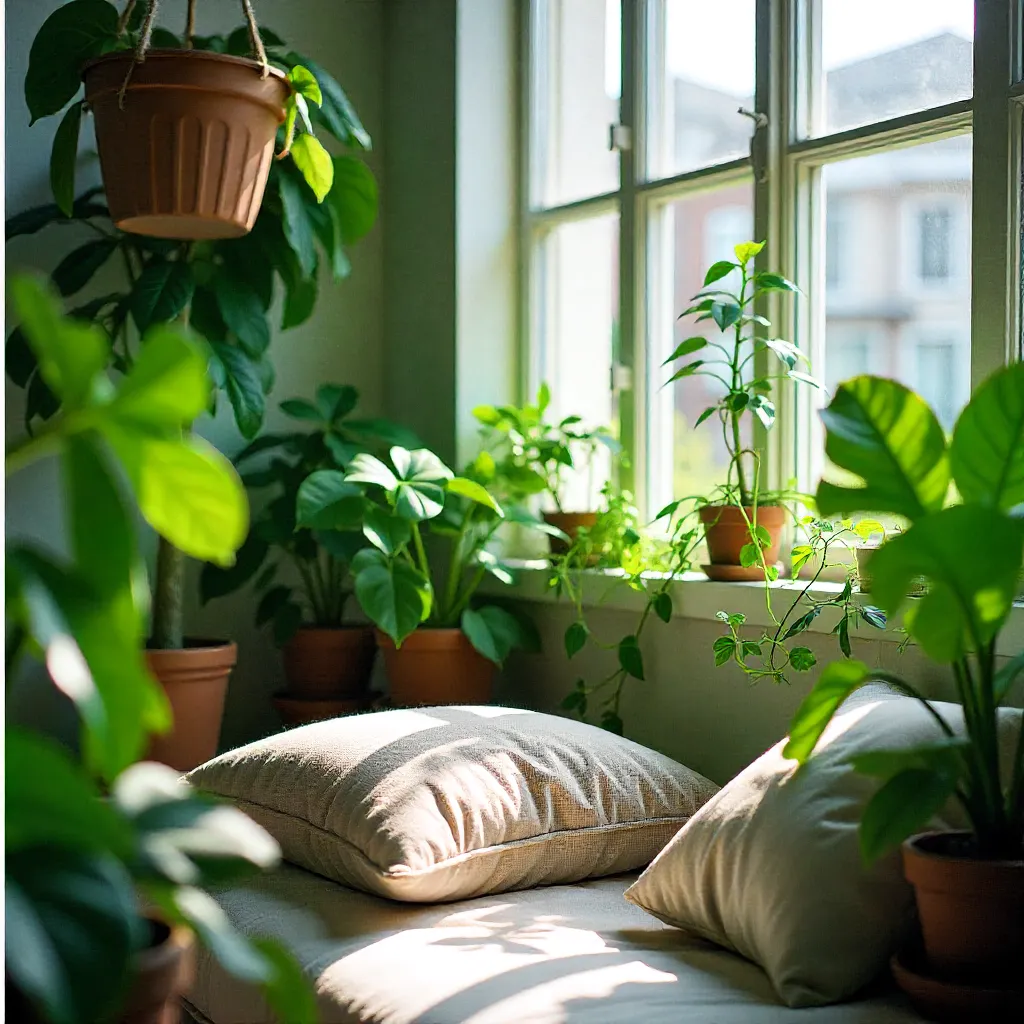
Select a quiet area with natural light, preferably near a window. This could be a corner of your bedroom, living room, or even a small nook in your home office.

Selecting Plants

Choose 3-5 plants of varying sizes to create visual interest. Include at least one larger plant as a focal point, complemented by smaller plants that add texture and depth.

Arrangement Tips

  • Place taller plants in the back, creating a layered effect
  • Group plants with similar care needs together
  • Use plant stands or shelves to create height variation
  • Add a comfortable seating option nearby for observation and care

Enhancing the Space

Consider adding elements like soft lighting, a small water feature, or natural materials (wood, stone, woven baskets) to complement your plant collection and enhance the calming atmosphere.
Plant Placement for Mood Improvement

Strategic plant placement can maximize the mental wellness benefits of your indoor garden. Consider these placement strategies:

Line of Sight

Position plants where you'll naturally see them throughout the day. This constant visual connection with nature provides ongoing stress relief and mood support.

Grouping for Impact

Create plant clusters rather than scattering individual plants. Grouped plants create a more immersive natural environment and have a stronger psychological impact.

Height Variation

Use plant stands, hanging planters, and floor plants to create vertical interest. This layered approach makes your space feel more dynamic and engaging.

Low-Maintenance Setups for Beginners

Starting your indoor garden doesn't require extensive plant knowledge or constant attention. These beginner-friendly setups provide maximum wellness benefits with minimal effort.

Essential Starter Kit

Begin with 3-5 easy-care plants that are forgiving of occasional neglect:

  • Snake Plant: Thrives with minimal water and low light
  • Pothos: Fast-growing and adaptable to various conditions
  • ZZ Plant: Extremely drought-tolerant and low-light friendly
  • Spider Plant: Produces offsets for easy propagation
  • Aloe Vera: Requires minimal care and offers practical benefits

Simple Care Schedule

Establish a basic routine that fits your lifestyle:

  • Weekly: Quick visual check of all plants
  • Bi-weekly: Water plants that need it (check soil first)
  • Monthly: Light dusting of leaves and general maintenance
  • Seasonally: Repotting or fertilizing as needed

Light & Humidity Maps

Understanding your home's light and humidity patterns helps you place plants optimally:

Bright Light Areas

South and west-facing windows receive the most light. Ideal for succulents, cacti, and flowering plants.

Medium Light Areas

East and north-facing windows provide gentle, indirect light. Perfect for most common houseplants.

Low Light Areas

Areas away from windows or with minimal natural light. Suitable for snake plants, ZZ plants, and pothos.

Humidity Considerations

Most homes have humidity levels between 30-50%. If your home is particularly dry, consider:

  • Grouping plants together to create microclimates
  • Using pebble trays filled with water beneath plants
  • Misting plants regularly (for those that benefit from it)
  • Placing humidity-loving plants in bathrooms or kitchens

Getting Started

Ready to create your wellness-focused indoor garden? Start small and expand gradually. Choose plants that match your lifestyle and available light, and remember that plant care is a learning process.

Don't be discouraged by occasional setbacks—every plant enthusiast experiences challenges. The key is consistency, observation, and adjusting your care routine based on your plants' needs.